Our Retort options

Water Spray Retort
Water Spray Retort
Water Spray Retort
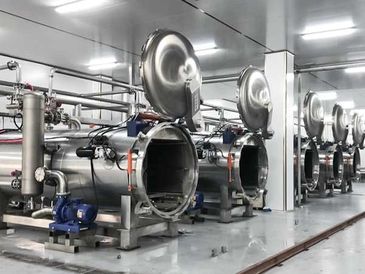
What is Water Spray Retort machine?
DTS Water Spray Retorts heat and cool the temperature through the heat exchanger, so steam and cooling water will not contaminate the product, and no water treatment chemicals are required, saving the requirement of water, water treatment chemicals and energy consumption. The process water is sprayed thr
What is Water Spray Retort machine?
DTS Water Spray Retorts heat and cool the temperature through the heat exchanger, so steam and cooling water will not contaminate the product, and no water treatment chemicals are required, saving the requirement of water, water treatment chemicals and energy consumption. The process water is sprayed through the pump and nozzles distributed in the steam water spray retorts to form a mist of water to the product to achieve the purpose of sterilization. Precise temperature and presure control can be suitable for a variety of packaging products.
Suitable for a wide range of packaging forms
The pressure control module developed by DTS continuously adjusts the pressure to adapt to the change of the pressure inside the product packaging, so that the deformation of the product packaging can be minimized. No matter the rigid containers such as tin cans and aluminum cans or plastic bottle & plastic boxes or flexible containers such as aerated flexible packaging can be easily satisfied by our steam water spray retorts.
Steam Air Retort
Water Spray Retort
Water Spray Retort
What is Steam Air Retort Machine?
DTS Steam Air Retort is a device that can achieve efficient, fast and uniform sterilization in a counter pressure environment. This steam air retort is equipped with a fan on the basis of steam sterilization, so that the heating medium and packaged food are in direct contact and forced convection. At the s
What is Steam Air Retort Machine?
DTS Steam Air Retort is a device that can achieve efficient, fast and uniform sterilization in a counter pressure environment. This steam air retort is equipped with a fan on the basis of steam sterilization, so that the heating medium and packaged food are in direct contact and forced convection. At the same time, air is allowed to exist in the retort, and the pressure can be controlled independently of the temperature.
Suitable for a wide range of packaging forms
The system is equipped with a flexible temperature control heating method, which can be linear or step-wise according to different requirements of products and processes. The built-in fan fully mixes steam and air to achieve precise temperature control of ±0.3°C and excellent heat distribution. In addition, this technology directly uses steam to heat up without heating through other media, thus increasing the heating speed and sterilization efficiency.
Steam Retort
Water Spray Retort
Rotary Retort Machine
What is Steam Retort Machine?
DTS Steam Retort Machine is an efficient, fast and uniform sterilizing equipment for cans and other products with excellent design and stable performance. The equipment combines steam and precise temperature control to ensure that the bactericidal products meet the required hygiene standards. The design featur
What is Steam Retort Machine?
DTS Steam Retort Machine is an efficient, fast and uniform sterilizing equipment for cans and other products with excellent design and stable performance. The equipment combines steam and precise temperature control to ensure that the bactericidal products meet the required hygiene standards. The design feature of the steam sterilizer is that it can achieve uniform temperature distribution, so as to optimize the heating process and improve the sterilization efficiency. In addition, the equipment has excellent flexibility and versatility, and it can handle various types of products, such as the ripening of raw materials such as potatoes, sweet potatoes, fruits and the sterilization of packaged products such as cans and sauces. Steam sterilizer is an industrial pressure vessel designed to keep food fresh or extend its shelf life through steam control. The equipment minimizes steam loss and improves energy efficiency through steam heating.
Energy-saving and efficient sterilization method
DTS steam retort is suitable for all kinds of tinplate can packaging food and beverage, including vegetables, fruits, beans, soup, sauce, milk, tea, etc. In the process of sterilization, the saturated steam state is maintained in the retort, effectively preventing oxidation and rust of the tank, and ensuring product quality and safety.
Rotary Retort Machine
Water immersion Retort
Rotary Retort Machine
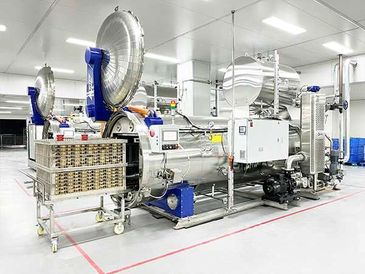
What is Rotary Retort Machine?
During the sterilization process, the food rotates in a continuous and slow manner within the device, which not only promotes rapid and even transfer of heat, but also shortens the time required for the entire sterilization process, thereby achieving the effect of high-temperature short-term sterilization tre
What is Rotary Retort Machine?
During the sterilization process, the food rotates in a continuous and slow manner within the device, which not only promotes rapid and even transfer of heat, but also shortens the time required for the entire sterilization process, thereby achieving the effect of high-temperature short-term sterilization treatment. In addition, this design effectively avoids overheating around the food and ensures food quality and safety. The temperature control system equipped with DTS can perform flexible and automatic control according to the characteristics of different packaging materials to ensure the efficiency and stability of the sterilization process. At the same time, the pressure control system is combined with the standard mode to automatically adjust the pressure and perform back-pressure correction according to different situations, effectively preventing the deformation and damage of the container to improve the qualification rate of the finished product.
Sterilization applications for high viscosity products
The design of the DTS Rotary Retort Machine not only solves the sterilization problems of large packaging and high-viscosity products, but also further improves the sterilization efficiency. In traditional static sterilization retorts machine, due to heat conduction limitations in the center of the product, long-term heating is often required to achieve the desired sterilization effect. Not only does this increase energy consumption, it can also result in loss of product quality.
The DTS rotary retort machine introduces a rotation system to continuously rotate and stir the product 360° during the sterilization process, effectively promoting the uniform distribution and transfer of heat.
Water immersion Retort
Water immersion Retort
Water immersion Retort
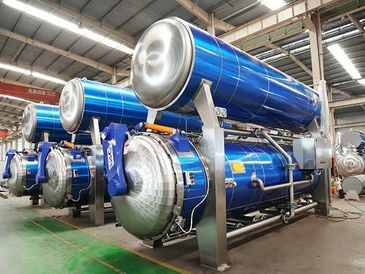
What is Water Immersion Retort Machine?
DTS water immersion retort is a device that achieves efficient, fast and uniform sterilization in a counter pressure environment. The unique liquid flow switching technology of our water immersion retorts effectively enhances the uniformity of temperature in the retort, thereby ensuring the consisten
What is Water Immersion Retort Machine?
DTS water immersion retort is a device that achieves efficient, fast and uniform sterilization in a counter pressure environment. The unique liquid flow switching technology of our water immersion retorts effectively enhances the uniformity of temperature in the retort, thereby ensuring the consistency of the sterilization effect. By heating the water in the hot water tank in advance and then diverting it into the sterilization tank, the product can start the sterilization process in a high-temperature environment, thereby achieving efficient and rapid sterilization effects. After sterilization, the hot water will be recycled into the hot water tank to achieve effective use of energy and achieve energy conservation and emission reduction.
Suitable for a wide range of packaging forms
DTS water immersion retort is suitable for all kinds of meat products, ready-to-eat meals, pet food, snack foods packaged in soft bags, meat or ham sausage packaged in ligated casings, milk drinks in plastic bottles and plastic cups, plant protein drinks, etc. PLC intelligent temperature and pressure control is used to ensure uniform heat distribution in DTS cascade retort and the aesthetics of the product after water immersion sterilizing.
Lab Retort
Water immersion Retort
Water immersion Retort
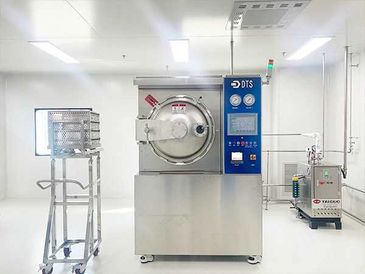
What is Lab Retort Machine?
The DTS lab retort machine/pilot retort machine is a highly flexible experimental sterilization equipment with multiple sterilization functions such as spray (water spray, cascading, side spray), water immersion, steam, rotation, etc. Users can freely combine different sterilization methods according to actual n
What is Lab Retort Machine?
The DTS lab retort machine/pilot retort machine is a highly flexible experimental sterilization equipment with multiple sterilization functions such as spray (water spray, cascading, side spray), water immersion, steam, rotation, etc. Users can freely combine different sterilization methods according to actual needs to adapt to various test scenarios. The lab retort is suitable for university laboratories and food manufacturers' new product development, formulate precise sterilization processes for new products and measure F0 values. At the same time, the lab retort machine can also simulate the sterilization environment in actual production, helping users better predict the sterilization effect of products and ensure product quality and safety.
Multifunctional laboratory sterilization equipment (new product innovation and research and development)
In response to the diverse sterilization needs of new products in factory laboratories, we have launched multi-functional laboratory sterilization equipment. This equipment is small in size and powerful in function. It is suitable for in a variety of packaging forms, such as flexible packaging, boxes, aluminum cans, aluminum bottles, iron cans, glass bottles, plastic bottles, etc., and can test suitable sterilization formula for new products.
This laboratory sterilization equipment has excellent functions that can monitor multi-point sterilization F0 values (heat penetration) in real time and allow flexible sterilization conditioning (linear control). In addition, the equipment also has strong storage capacity and can save more than 100 sterilization process recipes. By integrating advanced technology with the actual needs of traditional laboratory work, this equipment is committed to providing users with efficient, stable and safe sterilization solutions.
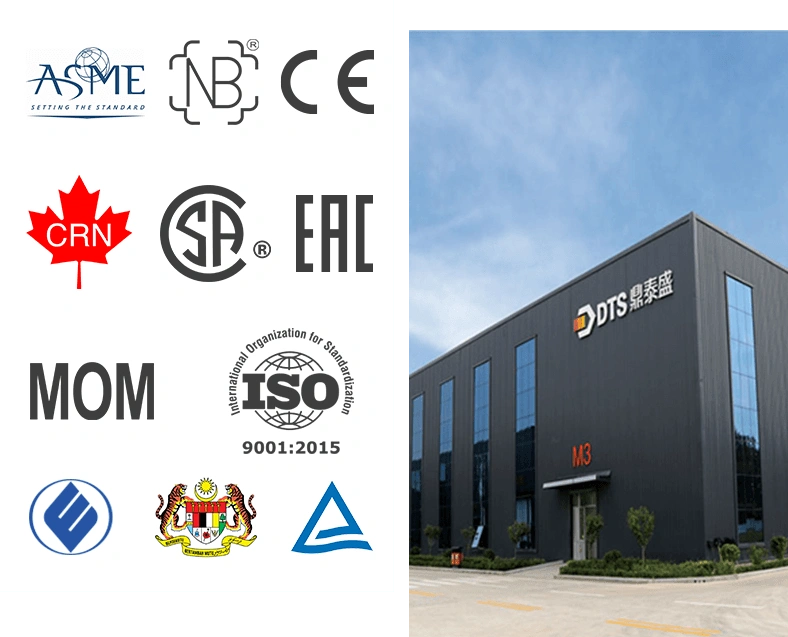
Our Retort Partner
MRH Packaging delivers high-performance retort processing systems tailored to the needs of the food and beverage, dairy, and pharmaceutical industries. In partnership with DTS, we provide comprehensive, innovative solutions that enhance operational efficiency and product quality.