Our Equipment Solutions
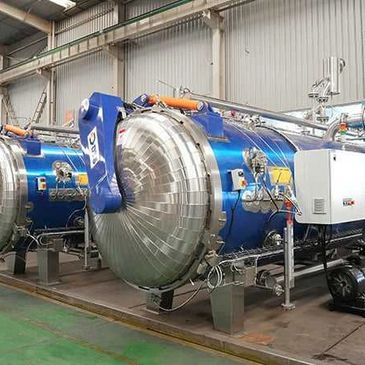
Retorts
Palletizers
Palletizers
A retort is a pressure-rated vessel used to thermally sterilize sealed, packaged foods (e.g., cans, pouches, glass jars). It heats products to precise temperatures under controlled pressure to achieve commercial sterility and shelf stability. Common systems include steam, water-spray, and water-immersion retorts. Typical cycles involve co
A retort is a pressure-rated vessel used to thermally sterilize sealed, packaged foods (e.g., cans, pouches, glass jars). It heats products to precise temperatures under controlled pressure to achieve commercial sterility and shelf stability. Common systems include steam, water-spray, and water-immersion retorts. Typical cycles involve come-up, holding, and cooling phases, with counterpressure to protect package integrity.
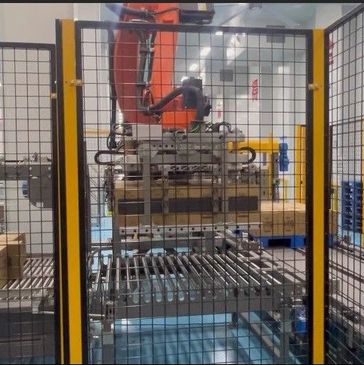
Palletizers
Palletizers
Palletizers
A palletizer is an automated machine that stacks products onto pallets in predefined patterns for storage or shipment. It handles cases, bags, bundles, pails, and crates, using layer-forming or robotic arms with specialized grippers. Systems manage pallet, slip-sheet, and top-sheet dispensing, plus automatic pattern changes for different
A palletizer is an automated machine that stacks products onto pallets in predefined patterns for storage or shipment. It handles cases, bags, bundles, pails, and crates, using layer-forming or robotic arms with specialized grippers. Systems manage pallet, slip-sheet, and top-sheet dispensing, plus automatic pattern changes for different SKUs. Integrated sensors and vision ensure placement accuracy, load stability, and traceability, with reject and rework options. Benefits include higher throughput, consistent stack quality, reduced labor strain, and seamless integration with conveyors, wrappers, and warehouse systems.
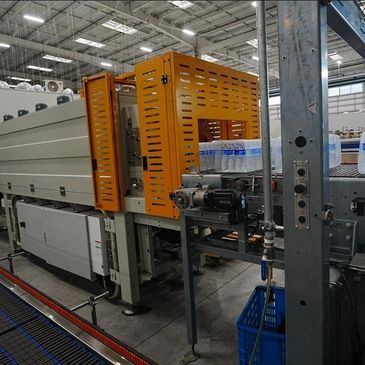
Packers
Palletizers
Labelers
A packing machine is an automated system that prepares products for distribution by forming, filling, sealing, and finishing packages with consistent quality and speed. It can handle a wide range of formats—bags, pouches, cartons, trays, blister packs, and corrugated cases—using materials like films, laminates, and paperboard. Modern mach
A packing machine is an automated system that prepares products for distribution by forming, filling, sealing, and finishing packages with consistent quality and speed. It can handle a wide range of formats—bags, pouches, cartons, trays, blister packs, and corrugated cases—using materials like films, laminates, and paperboard. Modern machines integrate weighing, dosing, labeling, coding, and inspection to ensure accuracy and traceability while minimizing waste. Options such as vacuum or modified-atmosphere packaging, nitrogen flush, and tamper-evident seals improve shelf life and safety. Advanced models support rapid changeovers, recipe control, and sanitation-friendly designs for high-mix or hygienic environments. They often connect with upstream processing and downstream case packing or palletizing, enabling a fully automated end-of-line. Selection depends on product form (solid, liquid, powder), target speeds, package style and size range, regulatory requirements, floor space, and total cost of ownership.
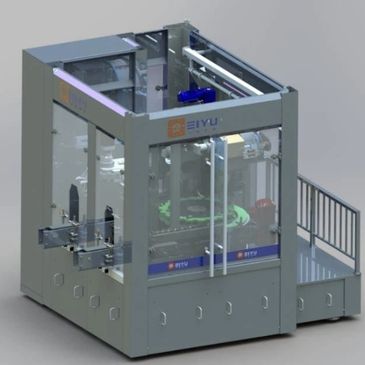
Labelers
Blow Molders
Labelers
A labeling machine applies labels to bottles and cans at high speed with precise placement and orientation. It supports multiple label types—pressure-sensitive, hot-melt wraparound, cold glue, and shrink-sleeve—with options for neck, body, and back labels. Systems handle PET, glass, and aluminum containers in various diameters, with quick
A labeling machine applies labels to bottles and cans at high speed with precise placement and orientation. It supports multiple label types—pressure-sensitive, hot-melt wraparound, cold glue, and shrink-sleeve—with options for neck, body, and back labels. Systems handle PET, glass, and aluminum containers in various diameters, with quick changeovers and recipe control for SKU flexibility. Integrated modules provide date/lot coding, label presence/position inspection, and automatic reject to ensure compliance and quality. Hygienic, washdown-ready designs and synchronization with fillers, conveyors, and packers enable seamless line integration.
Fillers
Blow Molders
Blow Molders
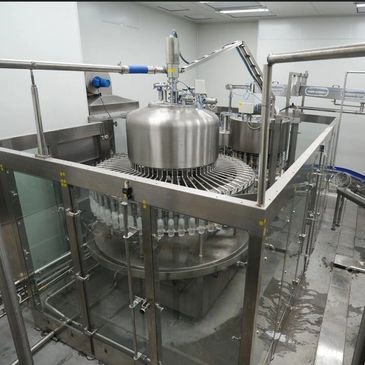
A filling machine automates dosing product into containers with high accuracy and repeatability. It supports a range of product types and viscosities using methods such as volumetric (piston/rotary), mass/flowmeter, gravity, peristaltic, auger (powders), and isobaric (carbonated). Features can include multi-head nozzles, anti-drip/foam co
A filling machine automates dosing product into containers with high accuracy and repeatability. It supports a range of product types and viscosities using methods such as volumetric (piston/rotary), mass/flowmeter, gravity, peristaltic, auger (powders), and isobaric (carbonated). Features can include multi-head nozzles, anti-drip/foam control, level sensing, clean-in-place (CIP), and tool-less changeovers. Configurations span inline and rotary systems for bottles, jars, cans, and pouches, with options for hot-fill, aseptic, and sanitary designs. Integration with cappers, labelers, inspection, and conveyors enables a complete, high-throughput packaging line.
Blow Molders
Blow Molders
Blow Molders
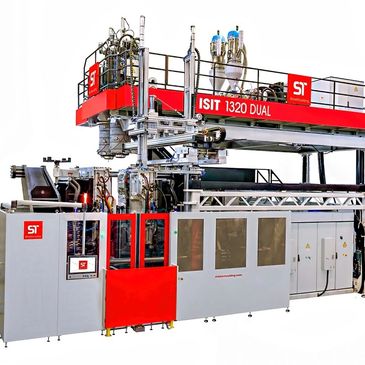
A blow molder forms hollow plastic containers by inflating heated plastic into a mold, producing items like PET bottles and HDPE jugs. Common processes include injection stretch blow molding (ISBM) for PET preforms and extrusion blow molding (EBM) for handleware and larger containers. Key steps involve preform or parison heating, stretch-
A blow molder forms hollow plastic containers by inflating heated plastic into a mold, producing items like PET bottles and HDPE jugs. Common processes include injection stretch blow molding (ISBM) for PET preforms and extrusion blow molding (EBM) for handleware and larger containers. Key steps involve preform or parison heating, stretch-and-blow or inflation, mold cooling, and controlled neck finish formation. Modern machines feature multi-cavity molds, servo parison control, neck orientation, quick changeovers, and in-line quality checks for wall thickness, leakage, and dimensional accuracy. Sustainability options include lightweighting, recycled (PCR) content handling, energy-efficient ovens, and closed-loop scrap regrind.